
A report released this month by EdWeek Market Brief found something that should stop every EdTech company in its tracks.
School districts in the United States have access to an average of nearly 3,000 different education technology tools every year. Students use an average of 48. Teachers use around 50.
Nearly 3,000 available. Fewer than 50 actually used.
That gap between what exists and what actually reaches people is the real accessibility problem I’m talking about today.
I guess we’ve been defining accessibility wrong.
When most people in education talk about accessibility, they mean:
Can a child with a disability use this tool?
Can a student who doesn’t speak English navigate this platform?
Does this website work with a screen reader?
Those things matter; they do matter enormously. However, there’s a deeper version of accessibility that gets far less attention.
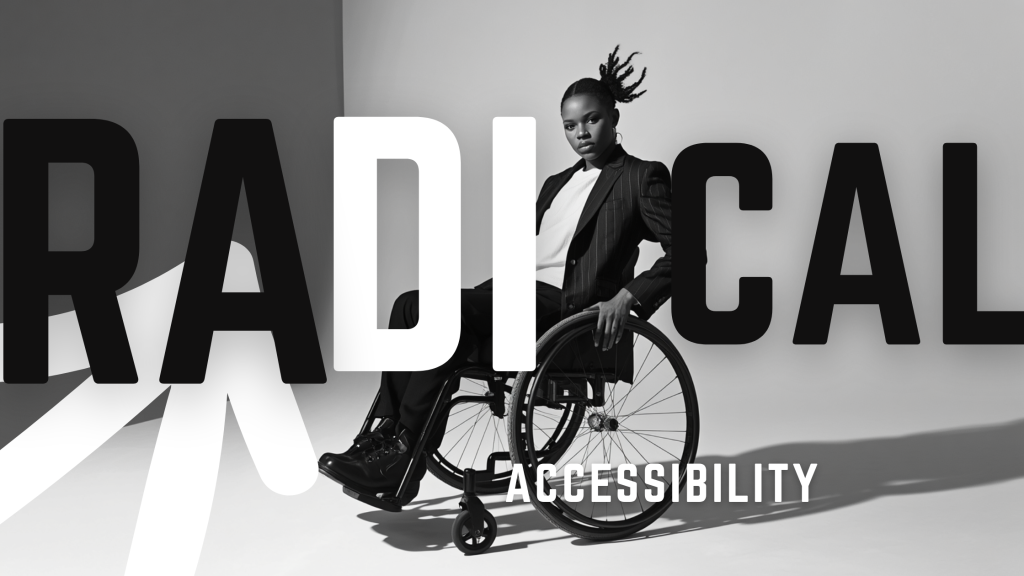
Radical Accessibility
Will someone access this? Does it reach them where they actually are? Does it exist in a form that makes sense for their life, classroom, language, and context?
In Nigeria, the accessibility gap looks different from the one in the US, but it’s the same disease.
We don’t have 3,000 tools that nobody uses. We have something harder: the assumption that if a government builds a school, education is now accessible. If a government buys tablets, learning is now accessible. If a curriculum is written, teaching is now accessible.
None of that is automatically true.
A school built without teachers is not accessible.
A tablet without electricity is not accessible.
A curriculum written in academic language that a teacher in Kogi State cannot interpret into a lesson is not accessible.
A mathematics programme designed for a private school in Lagos that gets sent to a government school in Zamfara without any adaptation is not accessible; it is just available.
And available is not the same as accessible.
We’ve been working on this question at the School of Mathematics Nigeria (SomNg) for a while now. And here’s what we’ve learned:
For something to be radically accessible, truly reachable by the people it was designed for, it needs to clear four barriers, not one.
- The financial barrier. Can the student, teacher or school afford to access this? Not just the tool itself, but the electricity to power it, the data to run it, the time to learn it.
- The physical barrier. Is it available where the child actually is? Not in Lagos, in the rural LGA three hours from the nearest city. Not only in the school with the projector, but also in the school with the chalkboard and the overcrowded classroom.
- The language and cultural barrier. Does this make sense in the context of the learner’s actual life? Are the examples Nigerian? Are the names in the word problems names a child in Kano recognises? Does the teacher feel confident enough in her own language to deliver it?
- The design barrier. Was this built for this learner, or was it built for someone else and then made available to this learner as an afterthought? There is a difference between designing for inclusion from the start and retrofitting for it later.
Most education programmes in Nigeria clear one, maybe two of these barriers. Very few clear all four.
The EdWeek finding about the US is really a mirror.
The lesson is that availability and accessibility are not the same thing, and the gap between them is where most education investment gets lost.
In Nigeria, we spend billions on infrastructure that doesn’t get used. We build schools that don’t get staffed. We write curricula that don’t get taught. We buy tools that don’t get opened.
Because nobody asked the most important question before spending the money:
Will this actually reach the child it was meant for? And if not, why not, and what would it take to change that?
That question is the foundation of everything we build at SomNg.
Radical Accessibility isn’t a feature. It’s a design philosophy, and it’s the difference between education that exists and education that works.