
Let me tell you something that might surprise you.
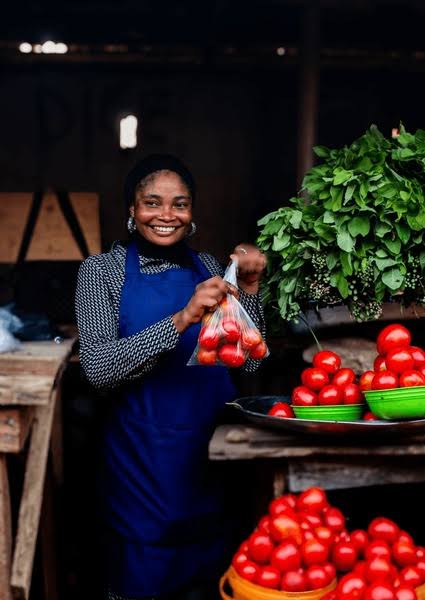
The woman selling tomatoes in Kano market? She’s doing mathematics. Every single day.
She knows her cost price. Her selling price. She calculates percentage profit in her head faster than most JSS2 students can open their textbook. She manages inventory, tracks debt, estimates weight by eye.
Nobody taught her with a formula. Nobody gave her a worksheet.
Life did.
Now here’s the uncomfortable question.
If mathematics already exists in the everyday life of our communities, in our markets, our architecture, our fabric patterns, our music, our farming, why are we walking into classrooms and teaching it like it arrived from another planet?
This is what a man named Ron Eglash asked when he travelled across Africa studying indigenous mathematical patterns. What Bishop and D’Ambrosio spent their careers documenting.
They gave it a name: Ethnomathematics.
The mathematics that already lives inside a culture, a community, a people, before any school ever opened its doors.
What does this look like in a real Nigerian classroom?
It looks like teaching ratios through the way a tailor in Aba calculates fabric.
It looks like teaching geometry through the symmetry in Yoruba adire patterns.
It looks like teaching probability through the way a farmer in Benue reads the sky before planting season.
It looks like a child recognising themselves in the lesson, and because of that, actually staying in it.
Here is what I’ve seen over and over in my work designing curriculum for Nigerian schools:
The moment a student sees their own world inside a mathematics problem, it becomes clearer.
They stop asking “when will I ever use this?”
Because the answer is already standing in front of them.
We have been teaching mathematics as if our students arrive empty. They don’t.
They arrive full of pattern recognition, of street-level logic, of cultural knowledge that is deeply, beautifully mathematical.
Our job is not to fill them, but to show them what they already carry.
That’s contextualised learning. That’s ethnomathematics. And that’s the curriculum Africa actually needs.